Clean copper pipe & tube
New plumbing offcuts, surplus lengths and clean copper tubing. Keep these apart from painted, soldered or mixed material so the load can be assessed accurately.

Turn unused copper pipe, tubing and plumbing offcuts into value. We buy copper pipe and fittings, including used material with soldered joints, for assessment.
Send a whole-load photo, a close-up, your suburb and estimated weight. We will confirm the material and collection options with you.
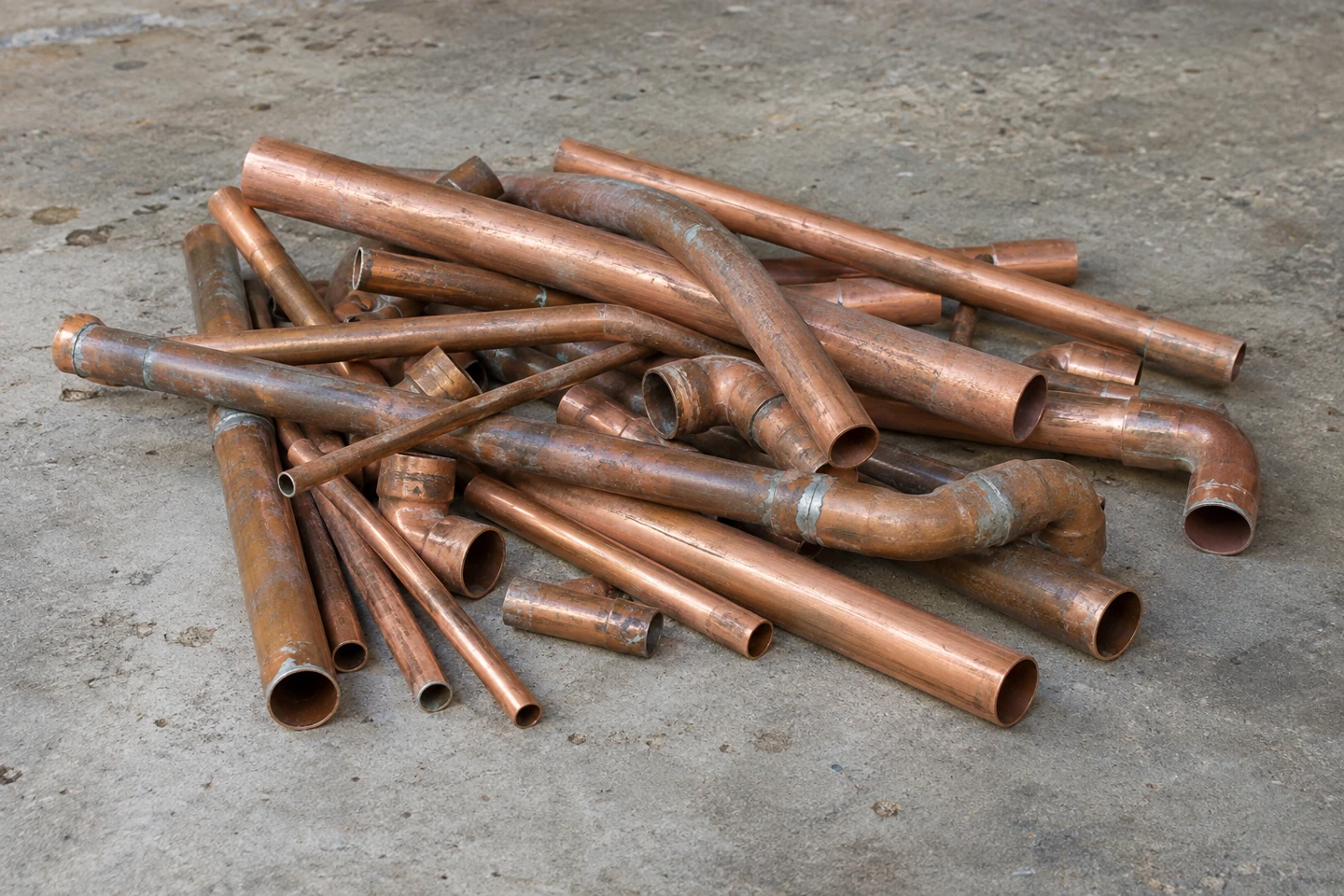
New plumbing offcuts, surplus lengths and clean copper tubing. Keep these apart from painted, soldered or mixed material so the load can be assessed accurately.
Removed plumbing pipe, bent tubing, soldered joints and older copper with surface discolouration. Show coatings, residue and attachments in your photos.
Copper elbows, tees, couplings and reducers. Brass taps and valves are a separate material; tell us if they are attached or mixed into the load.
A load of scrap copper pipe can contain several different materials. New offcuts from a plumbing installation may look quite different from old pipework removed during a bathroom renovation, but both are worth identifying before they go into general site waste.
Keep surplus lengths, tube offcuts and unused copper fittings together. If you generate regular loads, tell us the approximate amount and frequency so we can discuss a practical collection arrangement.
Removed water pipes, hot-water plumbing and old copper runs can include solder, clips, paint and other fittings. Photograph the load as it is; do not describe a mixed demolition load as clean copper.
Loose copper tubing can be submitted for assessment separately from coils and complete equipment. Tell us about foam insulation, attached components or residue, and confirm that equipment removal has already been arranged appropriately.
For longer pipe runs, bagged fittings or several containers, include an overview of the whole lot. Mention loading access and whether the material is loose, bundled or held in bins.
Customers often ask about No. 1 copper pipe and No. 2 copper pipe. These are grading descriptions, not a guarantee based on colour or a photo alone. We assess what is actually in the load, including its condition and attachments, before agreeing the final classification.
| Material in your load | What to show us | How to group it |
|---|---|---|
| Clean pipe & tube offcuts | Pipe ends and any coating or joint | Separate from soldered and mixed pieces |
| Soldered or used copper pipe | Joints, paint, residue and surface condition | Keep visibly different material together |
| Copper elbows, tees & couplings | Close-ups showing the fitting and solder | Separate clean and soldered fittings where practical |
| Pipe with brass valves or steel brackets | All attached materials, including plastic | Describe it as mixed plumbing scrap for assessment |
| Insulated copper tubing | The insulation and a representative tube end | Keep separate and ask about preparation first |
Brass fittings are not the same as copper fittings. Likewise, Bright & Shiny copper refers to clean bare wire; it should not be used as a label for a pile of copper pipe. Separating these items helps us understand what you have without guessing.
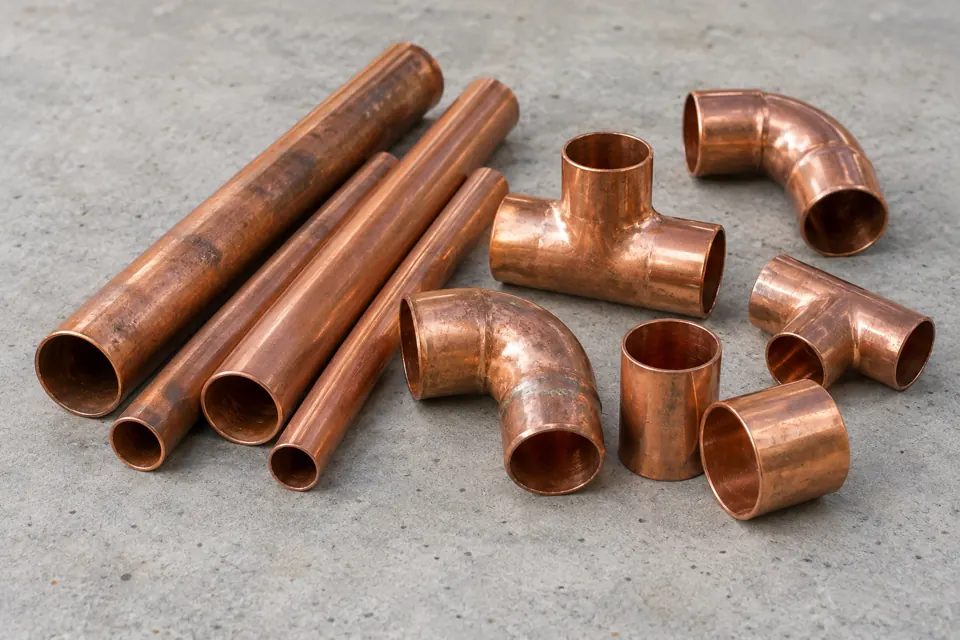
If a fitting is difficult to remove, leave it attached and ask us how to present it.
Your offer depends on the material's grade, weight, condition and the current market, together with any collection arrangements. Clean copper pipe, soldered fittings and mixed plumbing scrap may be assessed differently. A photo helps us give an initial assessment; the final grade, weight and price are confirmed before you proceed.
Request a current quote ↗There is no single rate that describes every plumbing load. Two piles with the same total weight may differ in the amount of copper, solder, brass and non-metal attachments they contain. Market conditions and collection arrangements also affect the offer, so request a current assessment rather than relying on an old advertised rate.
Photos support the initial discussion. Final weight and classification are checked before the sale is agreed. If the material differs from the photos or description, we discuss that with you before proceeding.
Send photos for a pipe quote ↗Tell us your suburb and approximate load size so we can confirm whether pickup is suitable. Enquiries can include Western Sydney, South West Sydney, the Inner West, the Hills District and other Sydney areas. Availability, any charges and the collection window are confirmed for your particular job.
Before arranging a vehicle, we need to know how the material can be reached. Long pipe lengths, stairs, a narrow driveway or a site without parking can change the loading plan. Let us know whether assistance or equipment is available and whether anyone will be there to provide access.
For repeat plumbing jobs or commercial strip-outs, include how often you expect to have material ready. We can discuss the arrangements with you rather than assuming every job needs the same setup.
Sorting reusable metal out of a renovation or plumbing job gives it a route back into the materials supply chain. Keeping copper separate from general waste also makes your site cleanup easier to organise.
Send photos of the pipe and its condition. Surface discolouration does not tell the whole story; coatings, residue and attached materials also matter when we assess it.
Yes, copper fittings can be assessed along with pipe and tube. Keep clean fittings separate from soldered or mixed components where practical.
Show them in your photos. Brass is assessed separately from copper and attachments can affect how the load is classified. You do not need to remove a difficult fitting before asking for a quote.
No polishing is needed. Remove loose rubbish where practical and tell us about paint, solder, insulation and other residue. Ask us before spending time preparing the load.
We assess collection requests using your suburb, material, quantity and access details. Include stairs, restricted parking, long pipe lengths or loading requirements. Collection and any charges are confirmed in advance.
Include your estimated weight when you enquire. Whether collection is suitable depends on the size and location of the load; a small quantity may need a different arrangement.
Tell us what has already been removed and include photos. If tubing is still connected to equipment, arrange appropriate professional removal before offering the loose scrap. AC coils can be assessed under our AC radiators and coils category.
Include one photo of the full load and close-ups of typical pipe ends, fittings and attachments. Add your suburb and approximate weight. Final grading and weighing confirm the offer.
No. Pipe and bare copper wire are different forms of scrap. Keep them separate and describe each part of your load so they can be assessed appropriately.
A description alone is not enough to confirm a grade. Send close-ups of the ends, surfaces and joints. Solder, coatings and attachments are assessed with the actual load before a final classification is agreed.
Show the condition in your enquiry. Surface colour alone does not confirm the grade or acceptance; we also need to understand any residue, coatings and attached materials.
Keep copper offcuts and small fittings together in a secure container. Tell us the approximate total amount so we can discuss a suitable arrangement; do not assume a small quantity will qualify for collection.
Yes. Include the expected amount, how often material becomes available and the site suburb. Any ongoing collection plan needs to be agreed around the actual volumes and access.
Tell us the approximate pipe lengths before preparing the load. We can discuss the loading requirements first, so you do not spend time cutting material unnecessarily.
See what to separate, what attachments to show and what to confirm before the sale.
Read the copper pipe seller guide ↗